


Preparing for a CQC inspection
Build a usable evidence trail before an inspection becomes an urgent project.

Published by Dr Sim Raiyat
Clinical Director, Dentorb — Private General Dentist
Preparing for a CQC inspection starts with knowing how your practice operates today, not creating a polished folder the week before a visit. Keep evidence current, assign responsibility for gaps and make it straightforward for your team to explain what happens in practice. CQC regulates services in England; practices elsewhere in the UK should check their own regulator's requirements.
Key takeaways
- Treat CQC readiness as a monthly routine, not a pre-inspection sprint.
- Map evidence to the five key questions so you can answer any inspector prompt quickly.
- Make sure the whole team can explain how the practice keeps patients safe.
“Is it safe? Is it effective? Is it caring? Is it responsive? Is it well-led?”
Start with the current inspection guidance
Read CQC's guidance for primary care dental services before deciding what to prepare. Use the information supplied for your own visit as the definitive request, rather than relying on an old checklist from another practice. Keep a record of what has been requested, who will provide it and when it is due. Do not assume every inspection follows the same timetable or asks for the same documents.
A useful starting point is our inspection-readiness checklist. Treat it as an organising aid, not an exhaustive statement of your obligations.
Build an evidence map
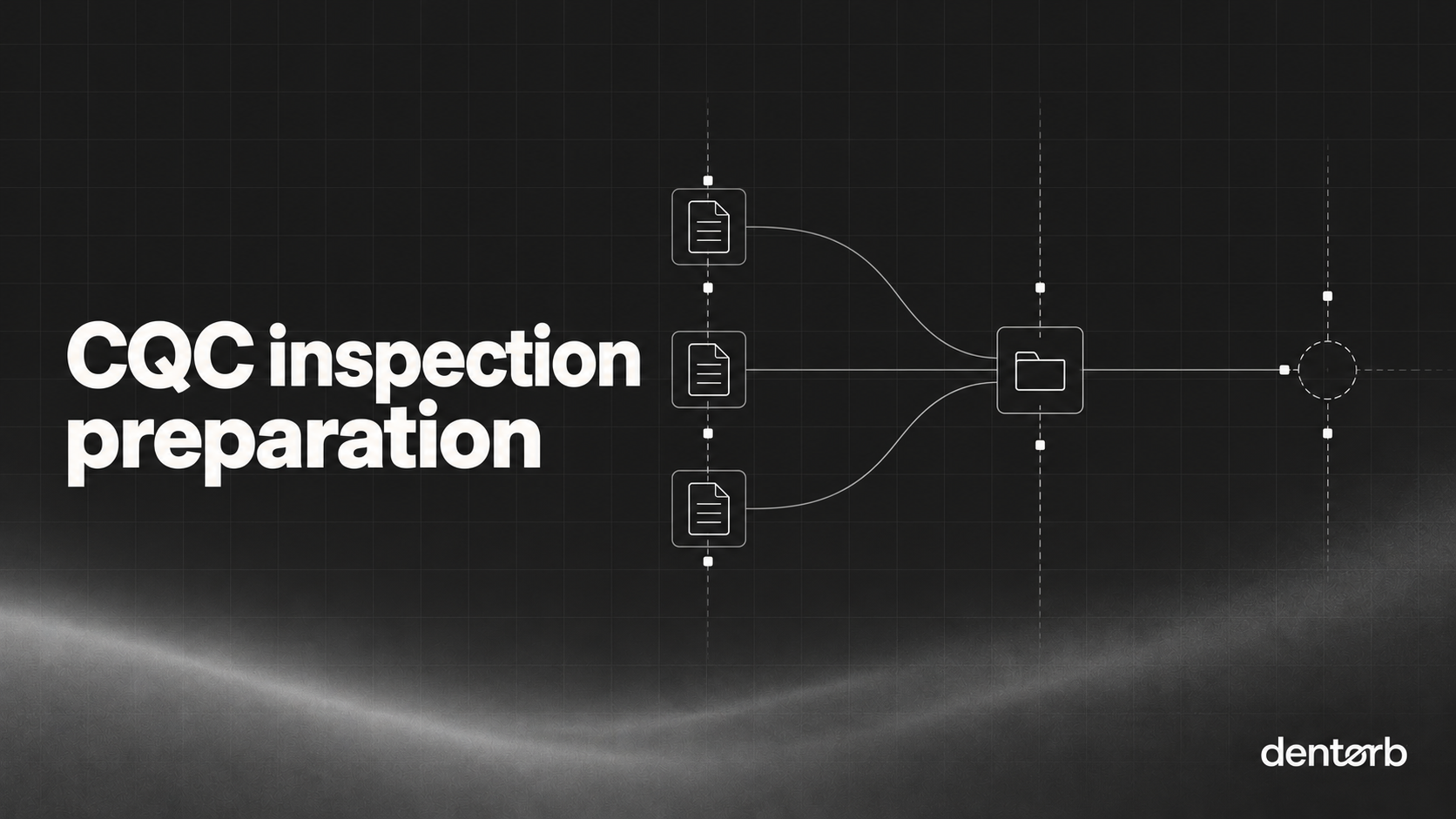
Make a simple index with these columns: area, owner, evidence location, last review and outstanding action. Include staff recruitment and training, infection prevention, equipment checks, medicines, safeguarding, complaints and governance. Link to the working record rather than creating a second copy that can become outdated.
Check whether the evidence demonstrates the process actually happens. A blank audit template is not a completed audit. A policy stored on a shared drive does not establish that relevant people understand it. If a check identified a problem, keep the action and follow-up beside the original finding.
Check staff and training records
Review role-appropriate training, registration checks where relevant and the evidence supporting recruitment decisions. Separate practice training expectations from GDC CPD requirements: they overlap, but they are not the same checklist. Identify missing certificates or expired records and arrange the next action with the staff member.
Our staff compliance area describes the records Dentorb is designed to organise. For learning records, review the CPD area, including the relationship between learning and personal development plans.
Make governance visible
Read recent complaints, incident reviews and meeting minutes. Can someone follow a concern from the original report through the decision to the action taken? Record what changed and how you checked whether the change helped. Avoid removing awkward findings from the evidence pack; a transparent improvement trail is more useful than an apparently perfect collection of documents.
Use a short team discussion to check that people know how to raise concerns, find current procedures and respond to a relevant emergency. This is about understanding normal work, not rehearsing stock answers for inspectors.
Finish with a prioritised action list
Give each gap an owner and a realistic due date. Escalate issues that could affect patient or staff safety rather than leaving them as routine administration. Keep the status visible and review unresolved actions. The practice compliance page shows how Dentorb approaches recurring checks and evidence organisation.
Test the evidence trail
Choose a completed audit and follow it from start to finish. Can you see who carried it out, what was found, what decision followed and whether the action was completed? If the audit identified a missing record, the follow-up should show the correction, not just a tick against “done”.
Then ask an authorised colleague to retrieve the evidence without help from the usual owner. If they cannot find it, improve the index or access arrangements. Do not give everyone access to restricted personnel records simply to make retrieval easier. Use the appropriate authorised person instead.
Before the visit, check that your team can explain how a relevant procedure works in their own words. The goal is to describe normal practice honestly, including any issue and the action being taken. Revisit unresolved items and distinguish completed improvements from work still planned.
A 30-day readiness plan
| Week | Focus | Output |
|---|---|---|
| 1 | Staff files and training | List of expiring or missing items with owners |
| 2 | Policies and procedures | Review dates updated; team read-and-sign chased |
| 3 | Audits and equipment | Open audit actions closed or re-dated |
| 4 | Complaints, feedback and governance | Learning summarised and shared at a team meeting |
Questions your team might be asked
- How would you raise a safeguarding concern here?
- What do you do in a medical emergency, and where is the kit?
- How do you know a policy has changed?
- How do patients give feedback or complain?
Sources and further reading
- CQC: dentists — information for providers
- CQC: assessment framework
- GDC: Standards for the Dental Team
Dentorb is pre-launch. Product links describe intended workflows, not a guarantee of availability or compliance. This guide is practical information, not legal, tax or clinical advice.